


NetSuite 2026.2 release is one of those updates where most items are optional, but one item has a clock attached. If you own integrations, this is the release to read with a pen in your hand.
NetSuite 2026.2: the change with a deadline (NLAuth and TBA)
Oracle is retiring older authentication paths and tightening the rules around the new one.
- NLAuth is being retired in NetSuite 2027.1. If any RESTlet, script, or middleware still sends email + password (NLAuth), it must be migrated.
- Token-Based Authentication (TBA) is being deprecated for new integrations in 2027.1. Existing TBA integrations keep working, but you will not be able to create new ones.
- PKCE becomes mandatory for newly created OAuth 2.0 authorization code flows in 2027.1 (applies to both public and confidential clients). If you build OAuth 2.0 now, build it with PKCE so you do not rework clients later.
In plain terms: if anything you run still authenticates with NLAuth, or you were about to stand up fresh TBA, the migration just moved onto your roadmap. The countdown started with this release cycle, not next year.
What to do this week (before you touch any code)
The fastest way to mess this up is to start rewriting integrations without an inventory. Start with visibility and ownership.
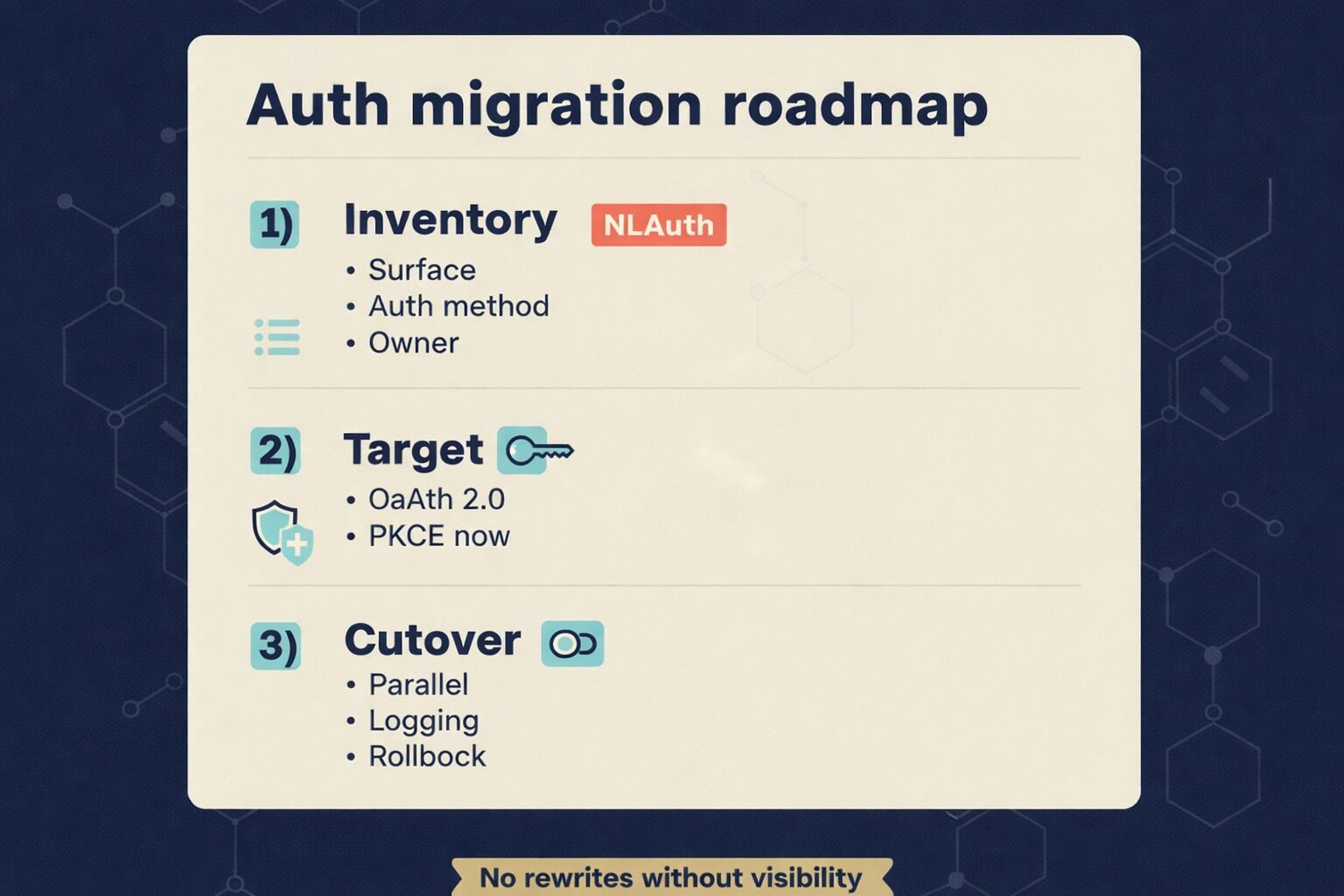
1) Build an integration inventory (one spreadsheet, one owner)
- Surface: RESTlets, REST Web Services, SuiteTalk SOAP, SuiteQL, middleware/iPaaS, 3PL/WMS connectors, payment/fraud tools, tax, EDI.
- Auth method: NLAuth, TBA, OAuth 2.0 (auth code / client credentials).
- Business function: orders, payments, shipping, refunds, finance, reporting.
- Owner + escalation: who can change it, who signs off on downtime.
2) Rank by blast radius
- Revenue-critical: order import/export, payment capture, shipping labels, cancellation/returns/refunds.
- Finance-critical: bank feeds, reconciliation, tax, payouts.
- Reporting-only: BI extracts, dashboards.
3) Pick the target pattern
- Default target: OAuth 2.0.
- For OAuth 2.0 authorization code: implement PKCE now.
- If you are tempted to migrate NLAuth to TBA as a quick fix: treat it as a bridge, not the destination.
4) Plan a controlled cutover
- Parallel run where possible (old + new auth in parallel).
- Central logging for auth failures and rate limits.
- Rollback plan and a cutover window you can defend.
Developer changes in 2026.2 that reduce risk
These are not flashy, but they matter if you run data-heavy integrations and want fewer production incidents.
Bound parameters in REST SuiteQL
REST SuiteQL now supports bound parameters. That means real parameterized queries instead of hand-rolling injection-safe input handling. If you expose SuiteQL behind an internal service, this is a straight risk reduction move.
SuiteTalk can run SuiteQL over REST Web Services
SuiteQL over REST expands options for teams standardizing on REST instead of SOAP. If you are modernizing integration surfaces, this is a practical step toward fewer legacy dependencies.
SuiteApp lifecycle endpoints over REST
NetSuite added REST endpoints to publish, upgrade, and deprecate SuiteApps programmatically. If you manage multiple accounts or do controlled deployments, this is the kind of change that reduces manual release friction.
Finance and analytics: what your team will actually notice
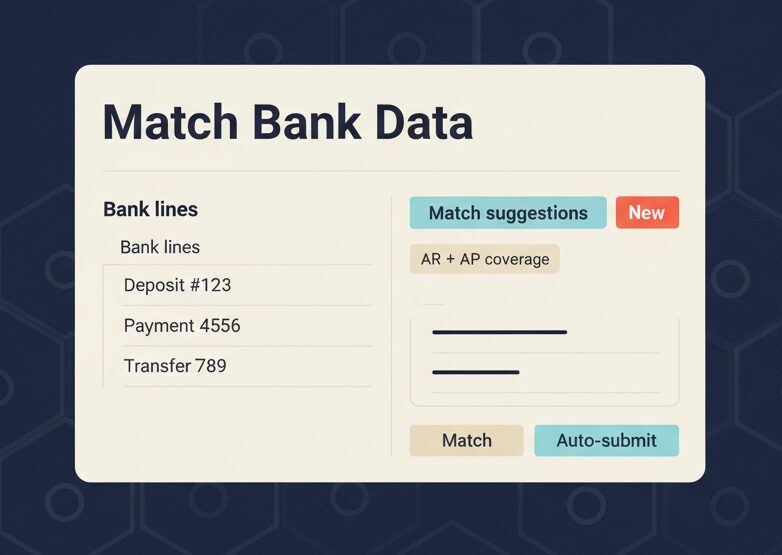
NetSuite 2026.2 includes workflow changes in bank reconciliation that reduce manual clicks and improve auditability.
Bank reconciliation: match suggestions, AR coverage, and auto-submit
On the Match Bank Data page, NetSuite introduced a Match Suggestions subtab that replaces the old review flow. Suggestions now cover both AR and AP, and actions are more structured. NetSuite also changed the UI so matching actions can auto-submit, removing an extra confirmation step.
Operationally, this matters because bank matching is often where month-end gets stuck. Fewer manual steps and clearer workflow reduces close friction.
Exports to real XLSX
Lists, saved searches, and reports can export to real .xlsx. This removes a lot of the CSV cleanup tax that finance teams do every week.
Saved searches into Analytics Warehouse
Saved searches can be promoted into Analytics Warehouse. If your reporting is split between saved searches and a warehouse, this is a path to more governed reporting without rebuilding everything from scratch.
Operations and HR: smaller changes with real control impact
Rough-Cut Capacity Planning: required vs available by work center
Capacity planning now shows required vs available capacity by work center. If you run manufacturing or any work-center constrained process, this is a cleaner way to spot bottlenecks before they become late orders.
Timesheets audit trail
Timesheets now include a full audit trail: time-field changes are logged with user and timestamp. This is a controls improvement, and it reduces internal disputes when approvals and edits happen late.
Passwordless login with passkeys
Passwordless login with passkey support lands for end users. The practical win is fewer password resets and fewer support tickets tied to login friction.
Common migration traps we see (and how to avoid them)
- Trap: migrating auth without mapping business workflows. Fix: tie every integration to a queue and an owner (orders, payments, shipping, refunds).
- Trap: treating TBA as the long-term solution. Fix: if you move to TBA, set a second milestone to move to OAuth 2.0.
- Trap: building OAuth 2.0 now without PKCE. Fix: implement PKCE in the client from day one.
- Trap: no monitoring. Fix: log auth failures, token refresh failures, and permission errors as first-class metrics.
Bottom line
If you only do one thing after the NetSuite 2026.2 release, do this: find every NLAuth integration and put it on a migration timeline. Then standardize all new work on OAuth 2.0 with PKCE so you are not building something you will have to replace.
If you want help, we typically start with a 60-90 minute integration audit: inventory, auth classification, blast radius ranking, and a migration plan you can execute without downtime surprises.