


AP and AR in NetSuite become harder to manage as e-commerce transaction volume grows and finance workflows stay manual. The right time to outsource comes when the team starts spending more time clearing backlogs than controlling cash, close, and reporting.
Outsource Accounts Payable (AP) and Accounts Receivable (AR) in NetSuite when the finance team starts spending more time clearing backlogs than controlling cash, close, and reporting. In e-commerce, that point comes earlier than many operators expect because transaction volume grows faster than finance process maturity.
Why AP and AR in NetSuite get overloaded in e-commerce
AP and AR do not break all at once. The strain shows up in small failures first. Cash application gets delayed. Vendor invoices sit in queues. Customer balances need manual cleanup. Reconciliation takes longer every month. One finance manager becomes the fallback for every exception.
E-commerce makes this worse because volume is uneven, payment methods are fragmented, refunds create noise, and platform data does not always match ERP timing. A team may look stable at 100 orders a day and then start missing controls at 300. The issue is usually not headcount alone. It is workflow design, ownership, queue management, and system discipline.
Signs your team should outsource AP and AR in NetSuite
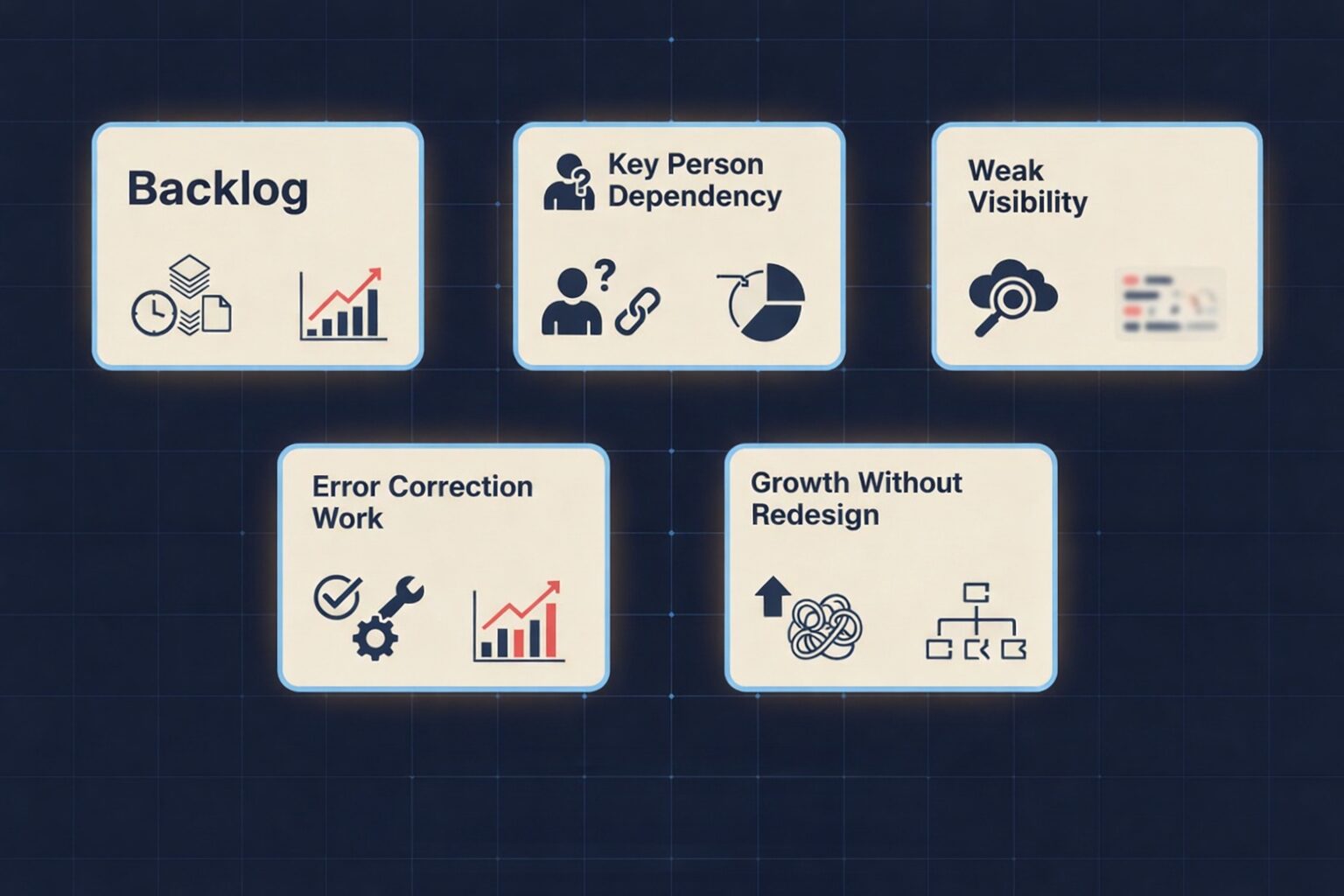
The first signal is backlog. If invoices, payment applications, reconciliations, or exception reviews are consistently late, the team is already operating in catch-up mode.
The second signal is dependency on one or two people. If month-end quality drops when one person is out, the process is fragile.
The third signal is weak visibility. If leadership cannot see aging, unapplied cash, open vendor issues, or close blockers without manual follow-up, the reporting layer is too dependent on individual effort.
The fourth signal is error correction work. If the team spends too much time fixing coding mistakes, duplicate entries, mismatched payments, or missing approvals, AP and AR are absorbing time that should go to control and analysis.
The fifth signal is growth without process redesign. More channels, more entities, more payment processors, and more vendors increase complexity. If the finance structure has not changed with that complexity, outsourcing becomes a practical capacity move.
Which AP and AR in NetSuite tasks can be outsourced safely
A lot of finance leaders hesitate because they treat AP and AR as too sensitive to hand off. In practice, many tasks can be outsourced safely if controls, approvals, and reporting are clear.
Common AP tasks include invoice processing, coding support, three-way match preparation, vendor communication, payment batch preparation, and reconciliation support. Common AR tasks include cash application, customer account review, collections support, dispute tracking, unapplied cash cleanup, and reporting preparation.
The goal is not to move random finance work out of house. The goal is to make AP and AR in NetSuite more stable, visible, and measurable.
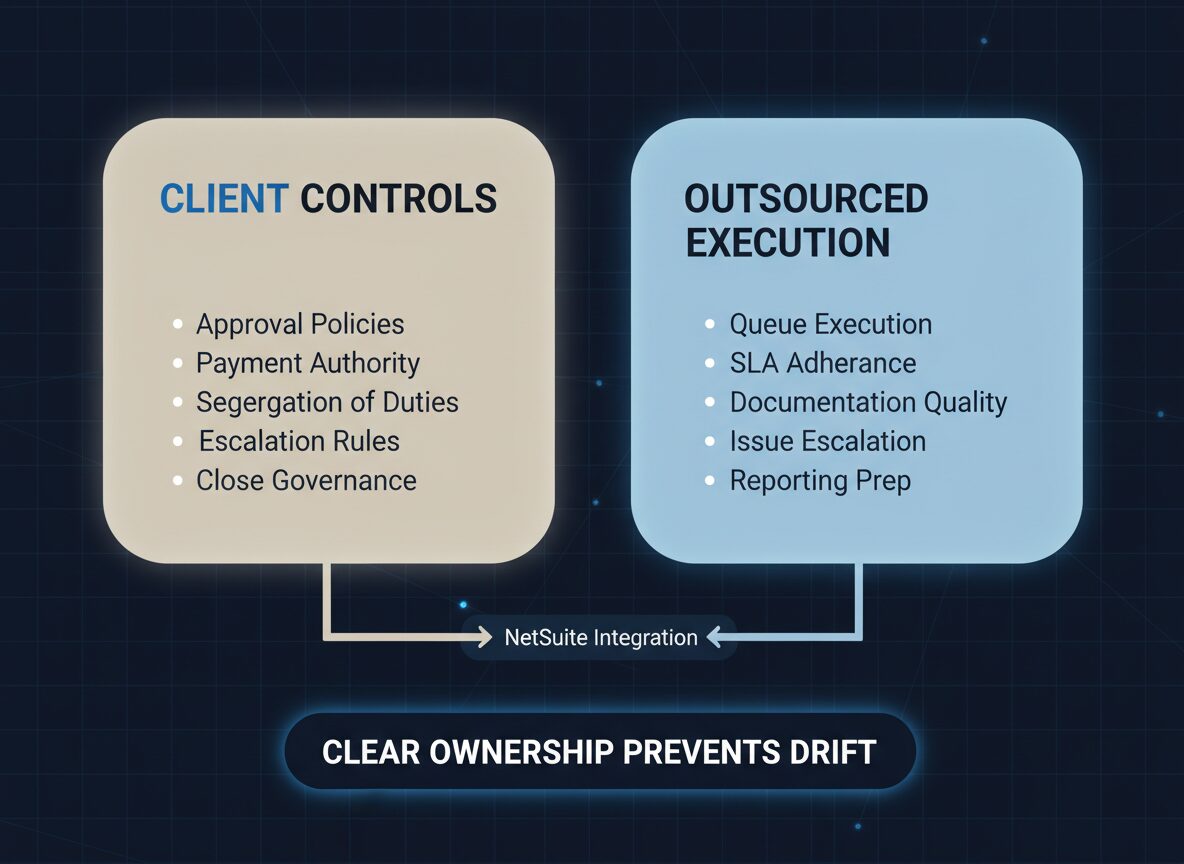
The rule is simple. Execution can be outsourced. Control should stay visible. Approval rights, exception thresholds, payment release authority, and final review logic should be defined before work moves to an external team.
What controls should stay in place after outsourcing
The biggest mistake is outsourcing activity without defining accountability. A good model keeps ownership clear on both sides.
The client should still own approval policies, segregation of duties, payment authority, escalation rules, and close governance. The outsourced team should own queue execution, SLA adherence, documentation quality, and issue escalation.
In NetSuite, this works best when the process is measured with a small KPI set. Start with invoice turnaround time, cash application timeliness, reconciliation backlog, exception aging, error rate, and close support deadlines. If those numbers are not visible every week, the model will drift.
How to evaluate an outsourced AP and AR partner
The right partner should understand more than bookkeeping. They need to understand transaction flow, ERP discipline, and e-commerce exceptions.
Ask how they handle processor mismatches, refund-related reconciliation issues, customer short pays, vendor disputes, and close deadlines. Ask how work is monitored, how quality is reviewed, what happens when performance drops, and how quickly they can replace or scale staff.
A weak provider sells labor. A strong provider shows process ownership, KPI management, and comfort inside NetSuite.
Final thoughts
The right time to outsource AP and AR in NetSuite is before backlog becomes your operating model. If finance is spending too much time chasing transactions, fixing preventable errors, and protecting month-end with heroics, the structure needs to change.
For e-commerce teams, stronger AP and AR in NetSuite usually lead to better control, cleaner reporting, and less month-end pressure. The goal is to give internal finance leaders cleaner data, more predictable execution, and more time for decisions that actually move the business.